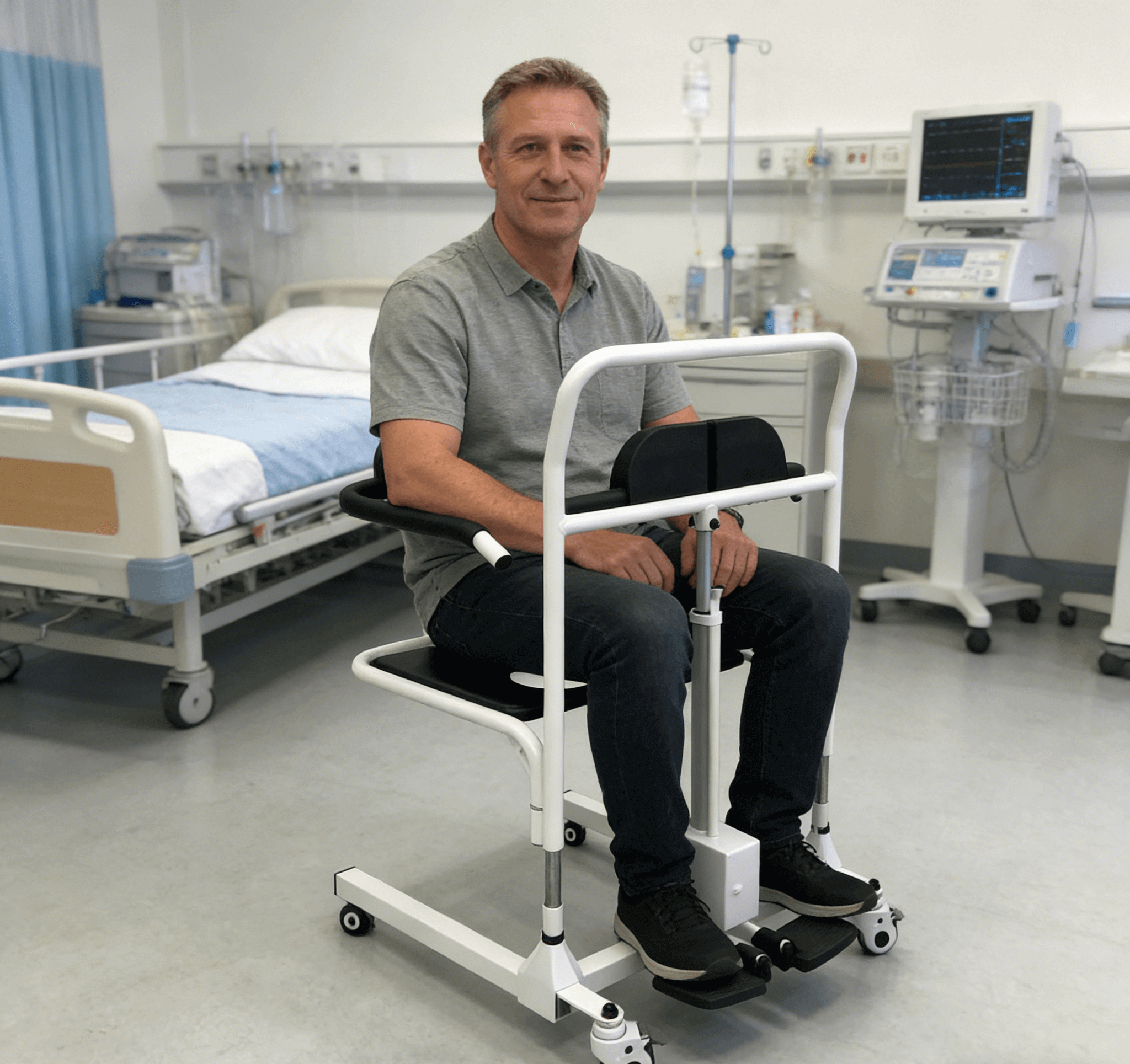
Category: Power Wheelchair
Posted by 2025-12-25 11:12
hoyer lift for tub
Hoyer Lift for Tub: Safety, Dignity, and Accessibility – A Bath Transfer Solution for People with Mobility Impairments
Bathing is supposed to be one of the most relaxing and private moments in daily life. However, for the elderly, people with disabilities, or post-surgery rehabilitation patients, stepping over the high edge of a bathtub can feel like an insurmountable "barrier." Slipping, falling, and relying on others for assistance – these issues not only pose physical risks but can also erode the user’s self-esteem and sense of independence. To address this, the Hoyer Lift for Tub (a specialized lifting and transfer device for bathtubs) has emerged as a key component in modern accessible bathroom design.
I. What is a Hoyer Lift for Tub?
Originally, "Hoyer Lift" referred to a patient transfer system developed by the Hoyer brand under the Arjo company. Due to its reliability and wide applicability, it has become a generic term for patient lifts. However, "Hoyer Lift for Tub" does not specifically denote a single official product; instead, it is a general term for Hoyer-style lifting devices designed specifically to assist users in safely entering and exiting bathtubs.
Such devices typically feature the following core characteristics:
Waterproof structure: Constructed from stainless steel, engineering plastics, or corrosion-resistant coatings to adapt to humid environments.
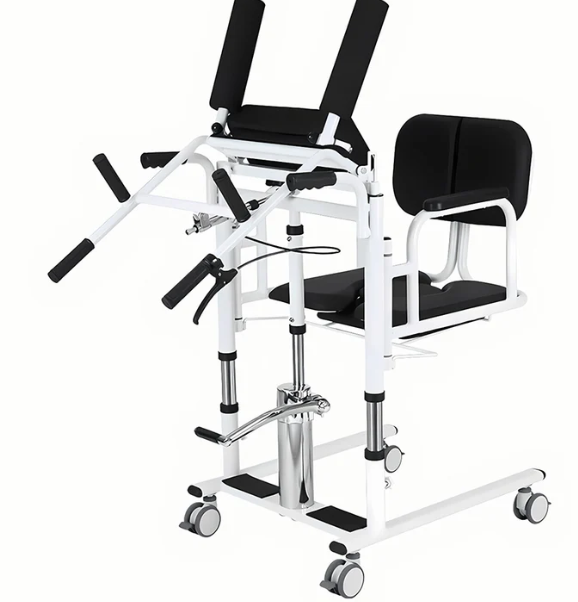
Adjustable boom or seat: Can extend into the bathtub to precisely position the user for seating.
Electric or hydraulic drive: Enables smooth lifting and lowering, preventing sudden drops.
Compatibility with specialized bathtub slings: Provides support for the torso and legs to prevent slipping.
Stable base or wall/floor-mountable design: Ensures no displacement during operation.
Common product names on the market include:
"Bath Patient Lift for Tub Transfer"
"Waterproof Hoyer-Style Tub Lifter"
"Electric Bath Hoist for Elderly and Disabled"
II. Why is Bathtub Transfer So Challenging?
The edge height of traditional household bathtubs usually ranges from 40 to 55 centimeters, creating a significant barrier for individuals with weak lower limbs, balance disorders, or limited joint mobility:
High fall risk: Slippery surfaces combined with the action of lifting legs = a high likelihood of losing balance.
Difficult caregiving: It is almost impossible for a single caregiver to safely assist someone in stepping into a bathtub.
Psychological resistance: Due to fear of injury, many elderly people actively reduce their bathing frequency, which affects hygiene and health.
According to data from the U.S. Centers for Disease Control and Prevention (CDC), the bathroom is the top location for non-fatal falls among the elderly, with nearly 80% of these falls related to bathtub use. Hoyer bathtub lifts are specifically designed to solve this problem.
III. Main Types and Working Principles
1. Portable Floor-Standing Tub Lift
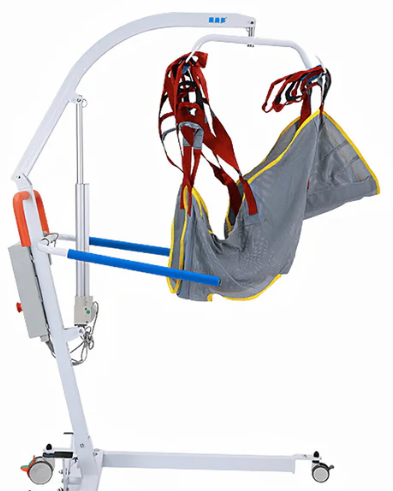
Structurally similar to a standard Hoyer lift, but with a longer boom and narrower base to fit bathroom spaces.
When in use, it is rolled next to the bathtub. A sling lifts the user from a wheelchair or bench, rotates, and gently lowers them into the bathtub.
Pros: Flexible, no installation required. Cons: Requires sufficient floor space, and stability is slightly lower.
2. Wall-Mounted/Ceiling Track Tub Lift System
Fixed to bathroom walls or ceilings, with a track that extends over the bathtub.
Offers higher weight capacity and smoother operation, suitable for long-term users with severe mobility dependence.
Pros: Saves floor space, high safety. Cons: High installation costs, requires home modification.
3. Integrated Rising Bath Seat
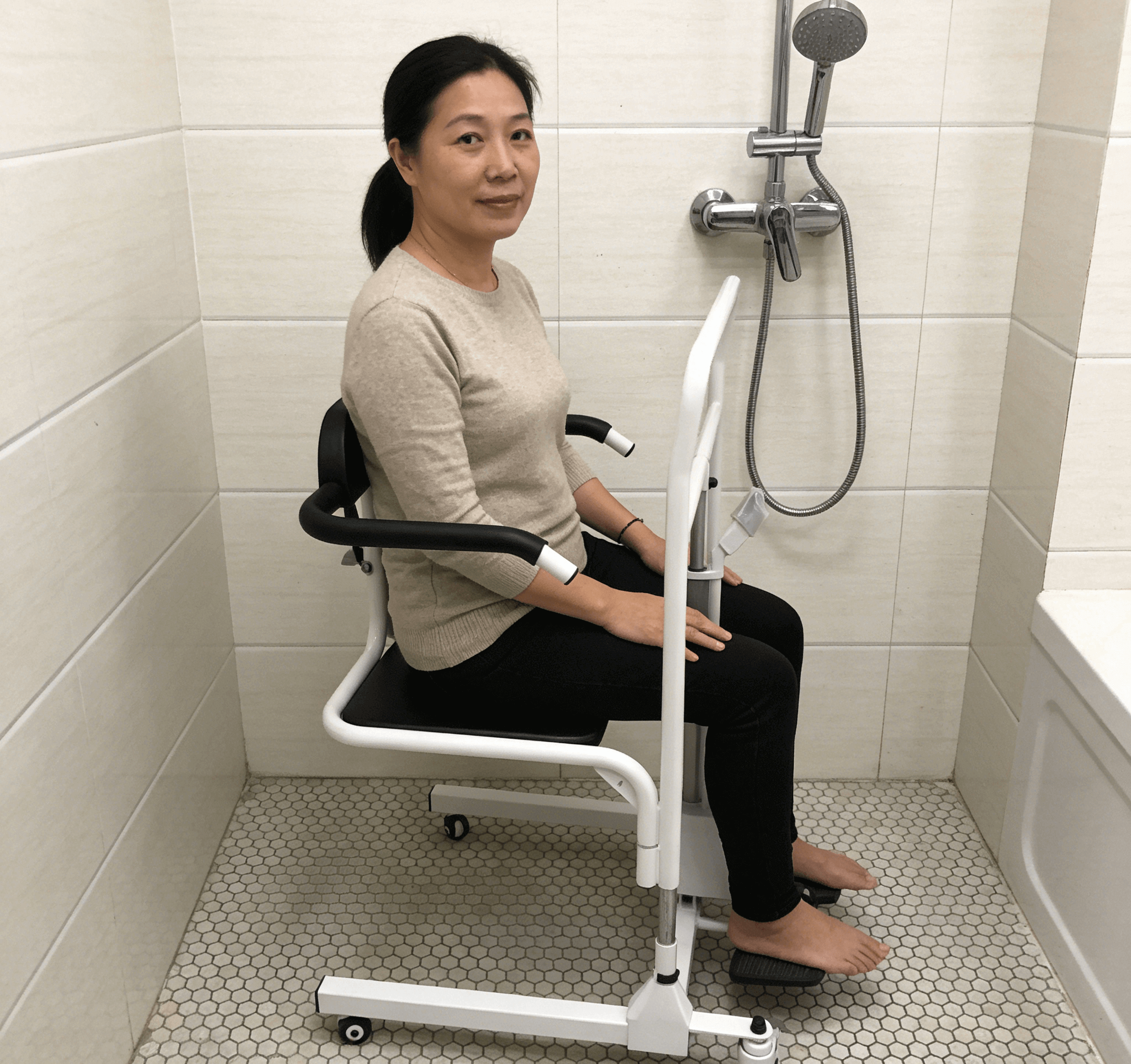
Though not a traditional "Hoyer sling-style" device, it serves a similar function: The user sits on a lifting seat outside the bathtub, and the device moves them into the tub before automatically lowering them into the water.
The reverse operation is used for exiting the tub, with no need to stand throughout the process.
Representative brands: Aqua Creek, Mangar Health.
Note: Chinese manufacturers (such as KDB and Yearstar) have launched a variety of "Hoyer-style bath lifts" that meet CE standards. Their prices are only 1/3 to 1/2 of imported brands, and they support customization of waterproof ratings and remote control functions.
IV. Example of Usage Process (Taking a Portable Hoyer Tub Lift as an Example)
Preparation phase: Roll the device next to the bathtub, extend the support legs, and attach the waterproof sling.
Transfer phase: Assist the user in putting on the sling, then activate the lift to smoothly raise them from the wheelchair.
Bathing entry phase: Rotate the boom, slowly move the user into the center of the bathtub, and gently lower them into a seated position.
Bathing phase: The caregiver assists with cleaning while the user remains in a safe seated position.
Bathing exit phase: Perform the reverse operation to lift the user and transfer them back to the wheelchair or a dry area.
Throughout the process, the user does not need to bear weight or cross barriers, significantly reducing physical exertion and the risk of accidents.
V. Recommendations for Selection and Installation
✅ Confirm bathroom dimensions: Measure door width and open space around the bathtub to ensure the device can enter and be fully extended.✅ Prioritize motors and control panels with a waterproof rating of IPX4 or higher.✅ Check sling material: It should be quick-drying, mildew-resistant, and easy to disinfect.✅ Consider battery life: The device should still complete one lift even in case of power failure (some models support emergency manual cranking).✅ Consult a professional assessment: An Occupational Therapist (OT) can recommend the most suitable transfer solution.
VI. Future Trends: Intelligent Integration and Human-Centered Design
The new generation of bathtub lift devices is evolving toward greater intelligence and comfort:
Voice/gesture control: Suitable for users with limited upper limb function.
Automatic temperature sensing alerts: Prevents scalding.
Integration with smart homes: E.g., automatically turning on exhaust fans and adjusting water temperature.
Modular design: A single device can be switched for use with beds, toilets, and bathtubs.
Conclusion
The Hoyer Lift for Tub is more than just an assistive technology; it is a tangible guarantee of "living with dignity." It turns bathing back into a pleasure rather than a burden, gives caregivers peace of mind, and helps users regain independence. As home aging-in-place modifications become increasingly common, equipping the bathroom with a reliable bathtub lift is one of the most gentle ways to protect your loved ones.